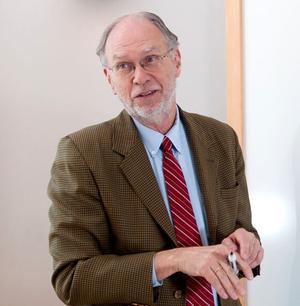
Aleksey S. Polunchenko, Ph.D.
Postdoctoral Research Associate
Department of Mathematics
University of Southern California
Last Updated: October 12, 2009

Present Mailing Address

Department of Mathematics
University of Southern California
3620 S. Vermont Avenue, KAP 108
Los Angeles, CA 90089-2532
United States of America
Office: KAP 416F
Phone: +1 (213) 821-1892
e-Mail:
On the Web: http://cams.usc.edu/~asp

Education

8/2004 — 8/2009   Doctor of Philosophy in Applied Mathematics
Institution: University of Southern California
Department of Mathematics
Los Angeles, CA
United States of America
Emphasis: Mathematical Statistics, Sequential Quickest Change-Point Detection
Thesis: Quickest Change Detection with Applications to Distributed Multi-Sensor Systems
Advisers: Remigijus Mikulevicius and Alexander G. Tartakovsky
8/2008 — 5/2009   Master of Science in Mathematical Finance
Institution: University of Southern California
Department of Mathematics
Los Angeles, CA
United States of America
Emphasis: Stochastic Modeling
8/2002 — 6/2004   Master of Science in Applied Mathematics & Physics
Institution: Moscow Institute of Physics and Technology
Department of Electrical Engineering & Cybernetics
Moscow, Russia
Emphasis: Time Series Analysis; Image Processing & Visual Tracking;
Adviser:
8/1998 — 6/2002   Bachelor of Science in Applied Mathematics & Physics
Institution: Moscow Institute of Physics and Technology
Department of Electrical Engineering & Cybernetics
Moscow, Russia

Research Synopsis

On the theoretical side, my research interests lie in the general area of mathematical statistics and probability, and specifically in sequential hypothesis testing, with particular emphasis on the problem of (optimal) sequential quickest change-point detection. This problem is considered under different settings: composite hypotheses where the pre- and/or post-change parameters are unknown, distributed multi-sensor setup where the information available for decision making is distributed across a set of (geographically separated) sensors, and multi-channel detection-identification where it is also desired to identify the channel(s) that ran out of control. This problem has an enormous spectrum of applications: quality control, financial markets, target tracking and detection — to name a few.


On the applied side, I am particularly interested in such areas of application as rapid intrusion/anomaly detection in ultra-high-speed large-scale computer networks, information assurance and data fusion in multi-sensor & distributed systems, computer vision, specifically object/target detection and tracking, and scientific computing, particularly processing large arrays of data on parallel clusters. In the first two these areas, I am currently active on two projects, sponsored by the National Science Foundation and the U.S. Army Research Office. A particular outcome of these projects — the Hybrid Intrusion Detection System — is currently in preparation to be patented. In the area of computer vision and visual object/target detection and tracking, I am interested in the design and analysis of efficient algorithms for clutter rejection and scene stabilization, as well as for image resolution enhancement. I have a record of one successfully completed and one on-going project on this subject. The funding for these projects is provided by the U.S. Office of Naval Research and the U.S. Army Research Office.

Areas of Professional Interest

Research Experience

9/2008 — Present   Research Assistant / Postdoctoral Research Assistant
Institution: Department of Mathematics
Center for Applied Mathematical Sciences
University of Southern California
Los Angeles, CA
United States of America
Grant Title: Optimal Changepoint Detection and Identification Algorithms with Applications
Sponsoring Agency: National Science Foundation
Principal Investigator (at USC): Alexander G. Tartakovsky
Duties: Analysis and development of numerical methods for performance evaluation of various quickest change-point detection procedures such as Page's CUSUM, Shiryeav-Roberts and modifications thereof.
Tools & Technologies used: MATLAB
10/2005 — 9/2008   Research Assistant
Institution: Department of Mathematics
Center for Applied Mathematical Sciences
University of Southern California
Los Angeles, CA
United States of America
Grant Title: Bayesian Sensor Networks and Optimal Fusion Techniques in Multi-Sensor Distributed Systems with Applications to Counter Terrorism and Information Assurance
Sponsoring Agency: Office of Naval Research
Principal Investigator (at USC): Alexander G. Tartakovsky
Duties: Development and performance evaluation of optimal and quasi-optimal change-point detection procedures in distributed sensor networks and applications to rapid intrusion detection in computer networks.
Tools & Technologies used: MATLAB
6/2005 — Present   Research Assistant / Postdoctoral Research Associate
Institution: Department of Mathematics
Center for Applied Mathematical Sciences
University of Southern California
Los Angeles, CA
United States of America
Grant Title: Spatio-Temporal Nonlinear Filtering with Applications to Information Assurance and Counter Terrorism
Sponsoring Agency: Army Research Office
Principal Investigator: Boris L. Rozovsky
Co-Principal Investigator (at USC): Alexander G. Tartakovsky
Duties: Development of efficient change-point detection procedures for composite hypotheses with applications to information assurance
Tools & Technologies used: MATLAB (primarily Statistical Toolbox), ScaLAPACK, Goto BLAS, Message Passing Interface (MPI) 1 & 2, Intel Compiler for UNIX, GNU Scientific Library, USC High Performance Computing Parallel Cluster (Linux)
URL: For more info click here
8/2004 — 12/2004   Research Assistant
Institution: Department of Mathematics
Center for Applied Mathematical Sciences
University of Southern California
Los Angeles, CA
United States of America
Grant Title: Spatio-Temporal Image Restoration and Scene Stabilization Algorithm for High-Resolution Target Recognition
Sponsoring Agency: Office of Naval Research
Principal Investigator: Boris L. Rozovsky (at that time affiliated with USC)
Co-Principal Investigator: Alexander G. Tartakovsky
Duties: Development of an Image Stabilization & Enhancement System incorporating adaptive spatial-temporal processing and an advanced jitter estimation/compensation/stabilization algorithm
Tools & Technologies used: Microsoft Visual Studio, Intel Integrated Performance Primitives, Intel Open Computer Vision Library, Microsoft DirecX (DirectShow), Codejock XTreme ToolKit Pro, Assembler (x86)
URL: For more info click here

Teaching Experience

8/2009 — Present   Lecturer / Postdoctoral Research Associate
Institution: University of Southern California
Department of Mathematics
Los Angeles, CA
United States of America
Course Title: MATH 218 — Probability for Business
Course Outline: basic probability; discrete and continuous distributions; expectation and variance; independence; sampling; estimation; confidence intervals; hypothesis testing;
Duties: preparing course plan and materials; lecturing; monitoring progress and attendance; advising students; recording grades and submitting reports; holding office hours (3 hours a week); grading homework assignments; preparing and grading quizzes; preparing and grading exams; review sessions;
1/2006 — 5/2006   Teaching Assistant
Institution: University of Southern California
Department of Mathematics
Los Angeles, CA
United States of America
Course Title: MATH 117 — Introduction to Mathematics for Business and Economics
Course Outline: functions; graphs; polynomial and rational functions; exponential and logarithmic functions; matrices; systems of linear equations;
Duties: leading discussion sessions (6 hours a week); holding office hours (3 hours a week); grading homework assignments; preparing and grading quizzes; grading exams; review sessions;
8/2005 — 12/2005   Teaching Assistant
Institution: University of Southern California
Department of Mathematics
Los Angeles, CA
United States of America
Course Title: MATH 126 — Calculus II
Course Outline: trigonometric functions; applications of integration; techniques of integration; indeterminate forms; infinite series; Taylor series; polar coordinates;
Duties: leading discussion sessions (6 hours a week); holding office hours (3 hours a week); grading homework assignments; preparing and grading quizzes; grading exams; review sessions;
1/2005 — 5/2005 Teaching Assistant
Institution: University of Southern California
Department of Mathematics
Los Angeles, CA
United States of America
Course Title: MATH 125 — Calculus I
Course Outline: limits; continuity; derivatives and applications; antiderivatives; the fundamental theorem of calculus; exponential and logarithmic functions;
Duties: leading discussion sessions (6 hours a week); holding office hours (3 hours a week); grading homework assignments; preparing and grading quizzes; grading exams; review sessions;
8/2003 — 6/2004   Assistant Lecturer
Institution: Moscow Institute of Physics and Technology
Department of Electrical Engineering & Cybernetics
Moscow, Russia
Course Title: Linear Circuit Design (Lab)
Course Outline: lumped circuit elements; network equations; zero-input and zero-state responses; sinusoidal steady-state analysis; impedance; resonance; network functions; power concepts; transformers; Laplace transforms;
Duties: leading discussion sessions (10 hours a week); preparing and grading lab assignments; review sessions; lab equipment maintenance;

Awards & Honors

Publications

1. A.S. Polunchenko and A.G. Tartakovsky, On Optimality of the Shiryaev-Roberts Procedure for Detecting Changes in Distributions, (submitted to the Annals of Statistics), 2009. [arXiv]
2. G.V. Moustakides, A.S. Polunchenko and A.G. Tartakovsky, Design and Comparison of Shiryaev-Roberts- and CUSUM-Type Change-Point Detection Procedures, Proceedings of the 2nd International Workshop in Sequential Methodologies, University of Technology of Troyes, Troyes, France, 15 — 17 June 2009. [pdf]
3. C. Papadopoulos, A.S. Polunchenko and A.G. Tartakovsky, A Hybrid Approach to Efficient Detection of Attacks in Computer Networks, (in preparation, to be submitted to Computer Networks).
4. G.V. Moustakides, A.S. Polunchenko and A.G. Tartakovsky, Numerical Comparison of CUSUM and Shiryaev-Roberts Procedures for Detecting Changes in Distributions, Communications in Statistics: Theory and Methods (S. Zacks Festschrift), 38:3225 — 3239, 2009. [arXiv]
5. G.V. Moustakides, A.S. Polunchenko and A.G. Tartakovsky, A Numerical Approach to Performance Analysis of Quickest Change-Point Detection Procedures, Statistica Sinica, 2009 (accepted, in press). [arXiv]
6. A.G. Tartakovsky and A.S. Polunchenko, Quickest Changepoint Detection in Distributed Multisensor Systems under Unknown Parameters, Proceedings of the 11th International Conference on Information Fusion, Hyatt Regency Hotel, Cologne, Germany, 30 June — 3 July 2008. [pdf]
7. A.G. Tartakovsky, M. Pollak and A.S. Polunchenko, Asymptotic Exponentiality of First Exit Times for Recurrent Markov Processes and Applications to Changepoint Detection, Proceedings of the 2008 International Workshop on Applied Probability, Compiégne, France, 7 — 10 July 2008. [pdf]
8. A.G. Tartakovsky and A.S. Polunchenko, Decentralized Quickest Change Detection in Distributed Sensor Systems with Applications to Information Assurance and Counter Terrorism, Proceedings of the 13th Annual Army Conference on Applied Statistics, Rice University, Houston, TX, 17 — 19 October 2007. [pdf]

Presentations & Seminar Talks

10/1/2009 Event: Third Annual MURI Review Meeting
  Location: Brown University, Division of Applied Mathematics
  Title: Quickest Changepoint Detection and Spatial-Temporal Image Processing Techniques with Applications to Network Security and Surveillance
  Remarks: joint work with Alexander G. Tartakovsky
1/17/2009 Event: Probability & Statistics Seminar
  Location: University of Texas at Brownsville & Texas Southmost College, Department of Mathematics
  Title: A Numerical Approach to the Design and Analysis of Sequential Change-Point Detection Procedures
  Remarks: joint work with George V. Moustakides and Alexander G. Tartakovsky
11/8/2007 Event: First Anual MURI Review Meeting
  Location: Emerald Room, Radisson Hotel, 3540 S. Figueroa St., Los Angeles, CA 90007
  Title: Hybrid Anomaly-Based Intrusion Detection System (IDS)
  Remarks: joint work with John Heidemann, Alexander G. Tartakovsky and Xue Cai
5/17/2007 Event: Special Interdisciplinary MURI Seminar
  Location: University of California at Los Angeles, Department of Mathematics
  Title: Efficiency of Binary Multi-Chart Change-Point Detection Procedures for Information Fusion in Distributed Multi-Sensor Networks: The Case of Composite Hypothesis
  Remarks: joint work with Alexander G. Tartakovsky

Professional Activities

References

Dr. Sergey V. Lototsky
Professor of Mathematics
Graduate Vice-Chair for Applied Mathematics
Department of Mathematics
University of Southern California
3620 S. Vermont Avenue, KAP 108
Los Angeles, CA 90089-2532
United States of America
Dr. Remigijus Mikulevicius
Professor of Mathematics
Department of Mathematics
University of Southern California
3620 S. Vermont Avenue, KAP 108
Los Angeles, CA 90089-2532
United States of America
Dr. Boris L. Rozovsky
Ford Foundation Professor of Applied Mathematics
Division of Applied Mathematics
Brown University
182 George Street, Room 216
Providence, RI 02912
United States of America
Dr. Alexander G. Tartakovsky
Professor of Mathematics
Associate Director
Department of Mathematics
Center for Applied Mathematical Sciences
University of Southern California
3620 S. Vermont Avenue, KAP 108
Los Angeles, CA 90089-2532
United States of America

Certifications

Computer Skills

Professional Societies

Languages